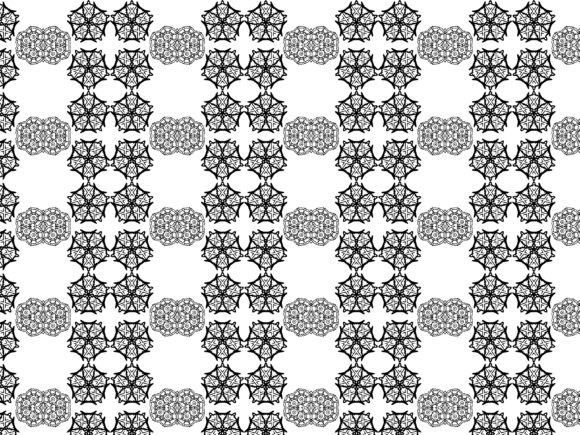
Fractal Pattern Ornament Horizontal: A Versatile Design for Modern Creativity
The Fractal Pattern Ornament Horizontal is a unique and visually compelling design that blends mathematical precision with artistic expression. This pattern is characterized by its repeating, self-similar structures that extend infinitely in both directions, creating an intricate and mesmerizing visual effect. Unlike traditional geometric or floral patterns, the Fractal Pattern Ornament Horizontal leverages the principles of fractal geometry to produce a design that feels both organic and structured.
What sets this pattern apart is its ability to maintain visual interest while remaining highly adaptable. The horizontal orientation allows it to flow seamlessly across surfaces, making it ideal for applications where a consistent, directional aesthetic is desired. Whether used as a background for websites, a textile print, or a decorative element in home interiors, the Fractal Pattern Ornament Horizontal offers a versatile solution that can be tailored to fit various creative needs.
Understanding Fractal Patterns and Their Unique Appeal
Fractals are mathematical constructs that exhibit self-similarity at different scales. In design, fractal patterns are often used to create complex yet harmonious visuals that evoke a sense of depth and movement. The Fractal Pattern Ornament Horizontal takes this concept and applies it to ornamentation, resulting in a design that is both aesthetically pleasing and functionally useful.
This type of pattern is particularly effective in digital media due to its scalability and adaptability. Unlike static images, fractal patterns can be resized without losing clarity or detail, making them ideal for use in web backgrounds, mobile interfaces, and other digital environments. Additionally, the infinite repetition of fractal elements ensures that the pattern remains visually engaging even when viewed at large scales.
Comparing Fractal Pattern Ornament Horizontal with Similar Designs
When evaluating the Fractal Pattern Ornament Horizontal, it's helpful to compare it with other popular design styles such as geometric patterns, floral motifs, and abstract textures. Each of these options has its own strengths and limitations, and the choice between them depends on the specific application and desired outcome.
Geometric patterns, for instance, offer a clean and structured look that is well-suited for modern and minimalist designs. However, they may lack the complexity and depth that fractal patterns provide. On the other hand, floral motifs are rich in detail and color but can become overwhelming in large-scale applications. The Fractal Pattern Ornament Horizontal strikes a balance between these two extremes, offering a design that is both intricate and versatile.
Abstract textures, another common alternative, often rely on randomness and irregularity to create visual interest. While this can be effective in certain contexts, it may not provide the same level of consistency and coherence as a fractal-based design. The Fractal Pattern Ornament Horizontal maintains a strong sense of order while still allowing for variation and depth, making it a more predictable and reliable option for many projects.
Strengths and Limitations of Fractal Pattern Ornament Horizontal
The Fractal Pattern Ornament Horizontal has several advantages that make it a compelling choice for designers and creators. One of its key strengths is its adaptability. It can be easily customized to suit different color schemes, sizes, and formats, which makes it suitable for a wide range of applications. Whether used in digital media, print, or physical products, this pattern offers a high degree of flexibility.
Another significant benefit is its visual impact. The intricate, self-repeating nature of fractal patterns creates a sense of depth and complexity that can elevate any design. This makes the Fractal Pattern Ornament Horizontal particularly well-suited for branding, packaging, and decorative elements where a strong visual presence is desired.
However, there are also some limitations to consider. One potential drawback is that fractal patterns can be more resource-intensive to generate and render compared to simpler designs. This may affect performance in certain digital applications, especially when working with high-resolution or large-scale implementations. Additionally, the complexity of the pattern may require more careful planning and execution to ensure that it aligns with the overall design goals.
Best-Fit Situations for Using Fractal Pattern Ornament Horizontal
The Fractal Pattern Ornament Horizontal is best suited for projects that require a blend of structure and creativity. It is particularly effective in the following scenarios:
- Web Backgrounds: The pattern’s horizontal flow and scalable nature make it ideal for website backgrounds, where it can enhance the visual appeal without overpowering content.
- Fabric and Textile Design: When printed on fabric, the pattern can add a sophisticated and modern touch to clothing, upholstery, and home textiles.
- Gift Wrapping Paper: The intricate details of the pattern can elevate the appearance of gift wrapping, making it a great choice for special occasions and holiday gifts.
- Home Decor: From wall art to decorative accents, the Fractal Pattern Ornament Horizontal can bring a contemporary and artistic flair to interior spaces.
- Cosmetics and Food Branding: The pattern’s elegance and uniqueness make it a strong candidate for product packaging in the beauty and food industries.
In each of these cases, the Fractal Pattern Ornament Horizontal offers a distinctive visual identity that can help brands stand out while maintaining a cohesive and professional appearance.
When to Consider Alternatives
While the Fractal Pattern Ornament Horizontal is a powerful tool, it may not always be the best choice. For example, in situations where simplicity and clarity are paramount, a more straightforward geometric or abstract pattern might be preferable. Similarly, if the design requires a high degree of customization or if performance is a concern, alternatives like vector graphics or simplified textures could be more appropriate.
Additionally, for projects that prioritize cultural or historical authenticity, traditional patterns such as mandala designs or folk motifs may offer a more fitting aesthetic. These alternatives can provide a richer narrative context that aligns better with specific design themes or brand identities.
Practical Examples and Real-World Applications
To better understand how the Fractal Pattern Ornament Horizontal can be applied in real-world scenarios, consider the following examples:
Example 1: Website Background
A tech startup might use the Fractal Pattern Ornament Horizontal as a subtle background for their landing page. The pattern adds visual interest without distracting from the content, creating a balanced and modern user experience.
Example 2: Fabric Print
A fashion designer could incorporate the pattern into a line of minimalist clothing. The horizontal flow of the design complements the clean lines of the garments, enhancing their aesthetic appeal.
Example 3: Gift Wrapping Paper
A boutique store might use the pattern on custom gift wrapping paper for holiday sales. The intricate design elevates the unboxing experience, making it more memorable and visually appealing.
These examples illustrate how the Fractal Pattern Ornament Horizontal can be adapted to meet the needs of different industries and design objectives.
Conclusion
The Fractal Pattern Ornament Horizontal is a versatile and innovative design that offers a unique blend of mathematical precision and artistic beauty. Its adaptability, visual impact, and scalability make it a valuable resource for designers working across multiple mediums and industries. While it may not be the best fit for every project, it is certainly worth considering for those seeking a distinctive and modern design solution.